Why Hindquarter Disengagement Isn’t the Answer

Richard van Dijk • June 30, 2026

Neck Yields, Lateral Flexion, and the One Rein Stop: Why They’re Not the Same Exercise


There’s a lot more depth to this topic than we can fit into one article, and each exercise has layers of nuance in how it’s taught and applied. Consider this a broad overview of how we see and use these exercises.


In the equestrian world, few topics get blended together—and misunderstood—as often as neck yields, lateral flexion, and the one rein stop. Many trainers teach them interchangeably or use one term to describe all three. But these exercises serve very different purposes, create different responses in the horse, and should be taught as separate skills. In our program, we make a clear distinction between them. This clarity helps horses learn more confidently, keeps riders safer, and supports correct biomechanics rather than fighting against them. Let’s break down each exercise, what it actually does, and why separating them matters.


Neck Yield: A Calm, Stationary Bend Toward the shoulder/girth

A neck yield is the simplest of the three exercises—and one of the most misunderstood. It is not lateral flexion. It is not a disengagement cue. It is not even a movement exercise. A neck yield is simply this: the horse bends its neck toward the girth or saddle area while keeping all four feet still.


Neck yields are both a communication tool and a relaxation tool. They help the horse soften to one rein, lower the head to activate a calming response, stay mentally present during saddling and groundwork, and show the eye clearly so we can assess attention and emotional state. They also develop a habitual response: bend the neck → stop the feet. This last point is important. When taught consistently, the neck yield becomes the foundation for a safer one rein stop—not because we force the hindquarters to disengage, but because the horse has learned to stop when flexed. This is training through habituation, not force.


One Rein Stop: A Learned Emergency Response

The one rein stop is an emergency tool only. It should not be used as a routine training method, and it should not be taught by mechanically disengaging the hindquarters. When a horse has learned through neck yields to stop its feet when the head is brought around, the one rein stop becomes safer, clearer, less physically stressful, and less likely to cause panic or imbalance. Instead of forcing the hindquarters to swing out—which can strain joints and muscles—the horse simply performs the same learned response it already knows: bend → stop. This approach keeps the horse’s body aligned, keeps the power “in the hindquarter,” and avoids the biomechanical problems caused by forced disengagement.


True Lateral Flexion: A Moving, Body‑Bending Exercise

Lateral flexion is often mistakenly taught at a standstill by pulling the horse’s head around. But true lateral flexion is a movement exercise, not a stationary one. It involves a tiny amount of flex through the spine, creating a light curve, plus the neck arching slightly inwards, and then lateral movements of the legs complete it.


We teach it in-hand through a small, progressive “clock exercise,” beginning with tiny quarter circles around the handler, encouraging the horse to step underneath with the hind legs, building toward full circles, and expanding the circle as the horse gains balance and understanding. Lateral flexion connects the rein to the whole body, teaches correct circle biomechanics, encourages hindquarter engagement rather than disengagement, improves balance, suppleness, and coordination, and prepares the horse for correct ridden work. It is a gymnastic exercise—not a stopping cue, not a neck bend, and not an emergency tool.


Why We Don’t Use Hindquarter Disengagement

Many training systems rely heavily on disengagement of the hindquarters. We don’t—and here’s why. It doesn’t relate to practical riding situations such as traffic, narrow paths, or group rides. In those environments, swinging the hindquarters out could be dangerous. Disengagement also changes direction when the goal is simply to stop forward movement, which can inadvertently teach the horse that it’s acceptable to avoid going where we intended. It contradicts the stop required in most disciplines, where the horse should halt straight and facing forward. It creates a second, conflicting stopping method, which leads to confusion and, ultimately, stress for the horse. Disengagement forces power out of the hindquarters, increasing the risk of strain or injury, and it doesn’t support correct biomechanics. We want horses to engage their hindquarters to stop straight, not disconnect them. Finally, disengagement relies on physical force rather than trained, calm responses. Training should build habitual, confident reactions—not depend on overpowering the horse.


A word on Straightness

Crookedness isn’t caused by lateral work. It’s caused by skipping the basics. Straightness begins in simple leading: forward in a straight line, backward in a straight line, and square halts. These foundational skills set the horse up for correct flexion later on.


Keeping these exercises separate creates clarity, safety, and better communication—and supports a training philosophy based on softness, understanding, and correct movement rather than force. Horses thrive when they’re taught in ways that make sense to them, with cues that are consistent, fair, and aligned with good biomechanics. When we honour that, we don’t just get better performance—we get calmer horses, clearer partnerships, and training that stands the test of time.
By Jenny Austin October 13, 2023
Horses have the ability to withstand the cold far better than us. There are several things about their bodies that come together to provide the horse with the ability to live in cold climates. We clever humans, with our high-tech fabrics still haven’t created anything to match the cold-beating mechanisms of the Horse.
By Jenny Austin October 13, 2023
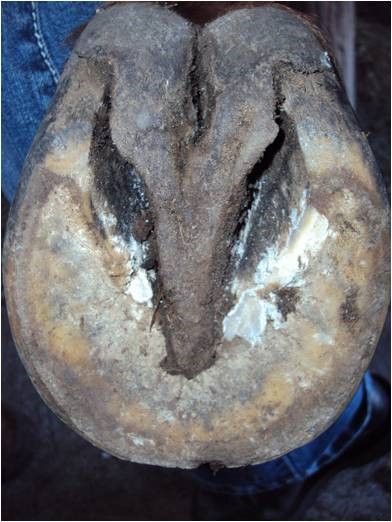
Thrush is common but not normal or healthy at all. This article explains how to diagnose, treat and prevent.
By Jenny Austin October 12, 2023
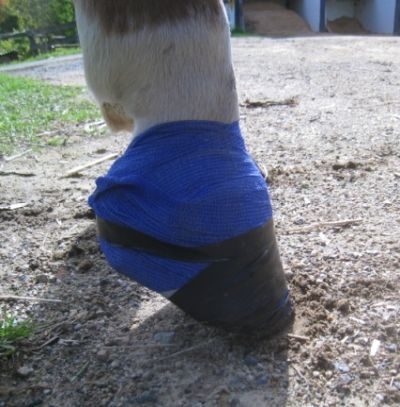
Diagnosis, Cause and Treatment of hoof abscesses
By Jenny Austin September 15, 2023
All your questions about treeless saddles are answered
By Jenny Austin September 13, 2023
Jenny Austin explains why shoes are not recommended for Laminitis recovery
By Richard van Dijk June 13, 2020
Are you aware of the Five Freedoms in the Animal Welfare Act? This Blog explains how we interpret these and put them into practice in our daily dealings with our own and clients’ horses. They are: Freedom from hunger and thirst: by providing enough fresh water and the right type and amount of food to keep them fit. Freedom from discomfort: by making sure that animals have the right type of environment, including shelter and somewhere comfortable to rest. Freedom from pain, injury and disease: by preventing them from getting ill or injured and by making sure animals are diagnosed and treated rapidly if they do. Animals should have access to veterinary care when needed. Freedom from fear and distress: by making sure their conditions and treatment avoid mental suffering. Freedom to behave normally: by making sure animals have enough space, proper facilities and the company of other animals of their own kind. Number 1 Freedom of the Animal Welfare Act is “Freedom from Hunger and Thirst : by providing enough fresh water and the right type and amount of food to keep them fit”. Now this can sound very straightforward but it’s easy to get it wrong and is a massive topic. Here at TTT : · We ensure that horses in our care have 24/7 low ESC+starch grass hay, plus grazing. If they are losing weight we might add in some higher calorie hay such as lucerne or a cereal hay. · The most important part is that it’s 24/7 low starch, high fibre “trickle feeding” as suits horses digestive systems. · We have in our training contract that if owners wish their horse to have a bucket feed, that they must supply that as an extra, and we are happy to give them whatever is instructed. · We will contact the owner and suggest a more energy dense bucket feed if the horse is losing weight on hay/grass. · Our own horses have a small feed of rinsed and soaked beet pulp, lucerne chaff, salt, a custom mineral mix and some have other supplements as needed for joint and gut health. · Our horses, if in work, will have soaked, cracked lupins added and we give whole oats after hard work. · Of course, we always have fresh water available. · We have heard recently of a trainer using feed/water restriction as a training tool – that is cruel and unnecessary and would never, ever happen here. Number 2 Freedom of the Animal Welfare Act is “Freedom from Discomfort by making sure that animals have the right type of environment, including shelter and somewhere comfortable to rest.” This one is fairly simple- here at TTT: · Horses are paddocked with a suitable companion, not yarded or stabled, with room to browse and move around. There’s soft sand to sleep on, trees for shelter and a lovely outlook. Number 3 Freedom of the Animal Welfare Act is “Freedom from pain, injury and disease: by preventing them from getting ill or injured and by making sure animals are diagnosed and treated rapidly if they do. Animals should have access to veterinary care when needed.” This one is not as straightforward as it seems and is closely linked to Number 1 and 4. Here at TTT: · Equipment is tailored for the comfort of each horse, not for the trainers’ comfort, to eliminate pain from ill-fitting equipment. · We never hit or beat a horse with anything. · We never tie up their legs or similar acts which cause pain and injury. · We don’t work horses to exhaustion or expect paces that they are not physically ready for. · The environment is free from hazards and as safe as we can make it to minimise risk of injuries. · We ask owners to have their horses in good condition upon arrival, with their teeth and worming recently attended to and with full disclosure of previous injuries, illness and disease. · We only provide companions which are suitable for settling new horses, not those which will harass or are aggressive. · We feed as per Freedom Number 1 to keep the horses healthy · Owners are notified immediately of any health concerns and our contract states that we will call a Veterinarian anyway if we deem it necessary but we can’t reach the owner first. Number 4 Freedom of the Animal Welfare Act is “Freedom from fear and distress: by making sure their conditions and treatment avoid mental suffering”. This one is also complicated and very much open to interpretation. Here at TTT: · Our training method keeps the horses stress levels under their fear threshold. The physical signs of stress have been identified and well documented by the equestrian science community and because of our extensive experience we are able to immediately identify the symptoms of stress. Anything that escalates stress and adrenaline is counter-productive to good learning. · We don’t implement some common and popular training methods that can cause fear and distress. For example, excessive use of the round pen; excessive circling/lunging; use of restraints e.g. hobbles, side reins and the like; excessive use of lateral movements, etc. · We aim for calm at all times and achieve this by breaking down training outcomes into individual elements, then establishing one outcome at a time until it is thoroughly understood. Richard’s Passive Focus Exercise is one way to attain calm. · We do not progress to faster gaits until we have established good responses to our aids in the slower paces and until the horse has developed good strength and balance. This ensures smooth transitions, communication and minimum stress at all paces. Some points are copied from Freedom Number 3 as they overlap, i.e. physical and mental suffering can be caused by the same thing - · Equipment is tailored for the comfort of each horse, not for the trainers’ comfort, to eliminate pain (and distress) from ill-fitting equipment. · We never hit or beat a horse with anything (causes pain and distress) · We never tie up their legs or similar acts which cause pain and injury (and distress) · We don’t work horses to exhaustion or expect paces that they are not physically ready for. · We only provide companions which are suitable for settling new horses, not those which will harass or are aggressive. Number 5 Freedom of the Animal Welfare Act is “Freedom to behave normally: by making sure animals have enough space, proper facilities and the company of other animals of their own kind.” This one overlaps and encompasses the first 4 Freedoms. So, as a summary, here at TTT: · Horses have 24/7 spacious paddock living with grazing or ad-lib mixed species grass hay · They have carefully matched companions · They have trees and valleys for shelter · They are very closely observed throughout the day (and we can hear them at night) · We are extremely experienced and notice the tiniest issues before they escalate · We are educated in nutrition, hoof care, conformation and riding disciplines · Emotional, mental and physical health of the horses is our number 1 priority Richard van Dijk & Jenny Austin
By Richard van Dijk August 17, 2016
Get the hoof trimming done despite the dangers and bad habits, or make life easier for everyone in the long term?